

Chawan, tea bowls traditionally used for matcha, come in many styles by incredible artists. Among them, the most emblematic is probably Raku pottery.
Rakuyaki was founded by Chōjirō, the first head of the Raku family, in the 16th century. Its technique traces back to Chinese Ming Dynasty tri-colored pottery, likely introduced to Japan by Chōjirō’s father, Amaya, a craftsman of Chinese origin. Chōjirō is believed to have mastered this vibrant glazing method, producing the earliest known Raku work in 1574: a two-colored lion statue. His first tea bowl is thought to have been created in 1579. One essential characteristic of Rakuyaki is the exclusive use of monochrome black or red glazes, reflecting the wabi aesthetics advocated by the great tea master Sen no Rikyū, who greatly influenced Chōjirō.
Raku ware was originally called Imayaki (“now wares”), referring to tea bowls with an innovative style. They were later renamed Jurakuyaki (“juraku wares”) because the Raku family lived near the Jurakudai Palace, in Kyoto, where Rikyū resided. Over time, Jurakuyaki was shortened to Raku-yaki. It is believed that the powerful warlord Toyotomi Hideyoshi gave Chōjirō a seal with the character Raku, which then became the family name. This is the only known example of a family name becoming synonymous with a pottery style. Today, Raku refers globally to a distinctive technique and style, though originally it applied only to wares created by Chōjirō under Sen no Rikyū’s guidance and practiced exclusively by the Raku family.
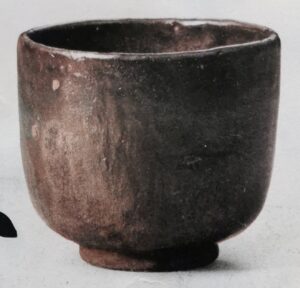

In addition to the glaze colors, Raku bowls are typically hand-shaped rather than wheel-thrown. They are fired using specific methods that quickly raise the temperature and are then cooled in open air, resulting in porous, earthy pieces.
If you visit Kyoto, don’t miss the Raku Museum, located next to the Raku family home and workshop. Opened in 1978, it houses a collection spanning over 450 years of Raku tradition. Exhibitions change four times a year. The current head of the family is Kichizaemon, the 16th generation, who maintains an incredible legacy of craftsmanship that persisted through the centuries – dedicated to creating tea bowls.

