
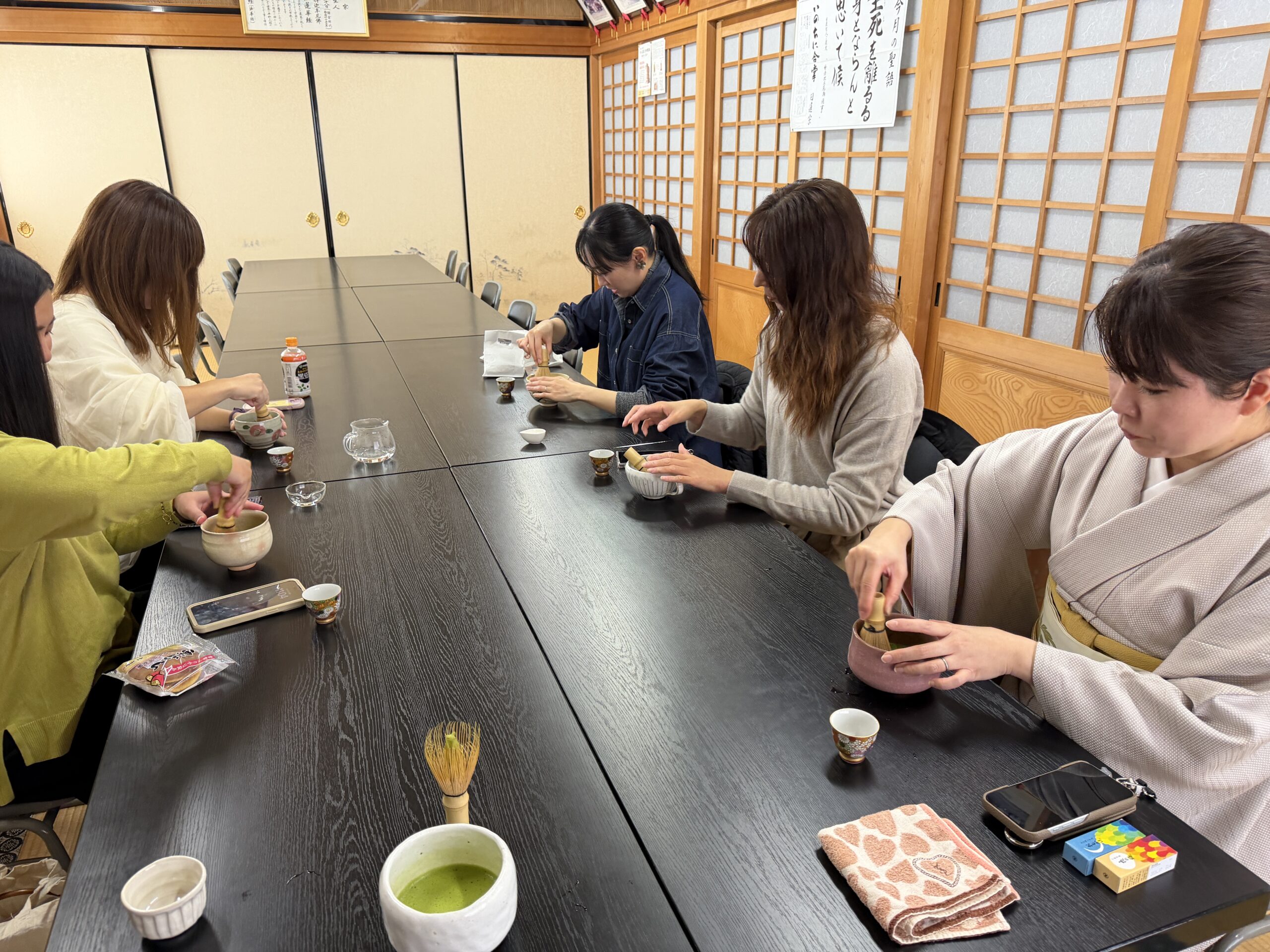
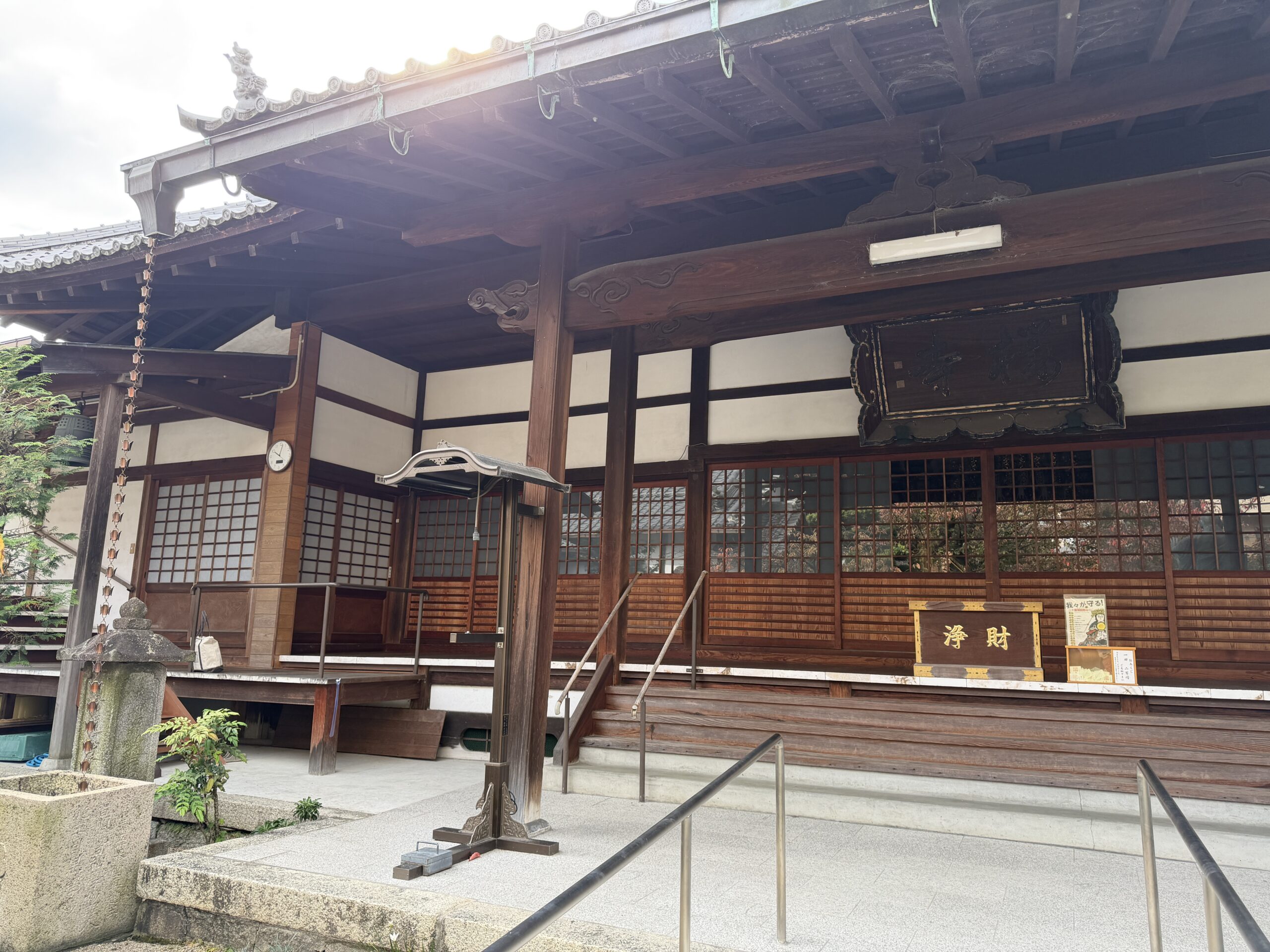
On November 11, the very first gathering of a new community circle called “Chaberi-ba” was held in the quiet neighbourhood of Fushimi, Kyoto, and the group has already begun to take root. To mark the occasion, the host chose matcha as the tea of the day, and the mothers prepared each bowl themselves. From the second session onward, however, the host plans to feature a variety of teas brewed in a kyusu teapot, such as sencha, gyokuro, and others.
For many Japanese, matcha feels like a highbrow drink, something not usually enjoyed in daily life, and often thought to require knowledge of formal etiquette. In this session, the host demonstrated that matcha can be easily prepared and enjoyed casually at home, while providing a simple guide on how to whisk it properly.
So…what exactly is Chaberi-ba? Once a month, mothers gather to enjoy fine Japanese tea and sweets while taking a gentle pause from their busy lives. The circle is hosted by Machi, a mother of a soon-to-be four-year-old boy and a member of our team. She founded this circle with two purposes in mind, though one stands above all: to create a time and place where mothers can return to themselves – a space that accounts for about ninety percent of the reason she started it. The name “Chaberi-ba” is a coined word that combines the Japanese word “shaberi-ba” (meaning “a place to chat”) with the word “cha”.
Contents
Why “Chaberiba” Was Born
The motivation behind this project is simple yet profound: to create a place and time for mothers to return to themselves.
In Japan, traditional expectations still place most of the burden of housework and childcare on mothers. While social attitudes are gradually shifting, many women continue to sacrifice personal time, career opportunities, and even rest for the sake of their families.
A 2019 international survey comparing Japan, Korea, the United States, Sweden, and Germany revealed that Japanese mothers rated their parenting satisfaction the lowest among the five countries.
Fathers’ participation in childcare was also ranked at the very bottom.
While dual-income families are increasing, over 60% of working mothers in Japan feel they are raising children “alone.”
Furthermore, Japan has the lowest usage rate of babysitting and childcare services among these countries, often seen as a “luxury,” and financially out of reach for many families.
When a child becomes ill, it is usually the mother who receives the phone call from daycare or school, even when the father is listed as the primary emergency contact.
It is the mother who takes leave from work, who cuts her day short, who juggles between professional and home duties.
And while few criticize fathers for going out drinking after work, mothers who do the same are sometimes judged harshly:
“How could a mother of a small child go out at night?” people might say.
A Day in the Life of a Japanese Mother
Many Japanese mothers start their day before dawn.
They prepare a nutritious breakfast such as miso soup, rice, grilled fish, and omelets, and often pack elaborate bento lunchboxes for their family.
A Japanese bento is more than just a meal; it’s a miniature art form, carefully balanced in color and nutrition.
After dropping the children off at kindergarten or daycare, mothers head to work until evening, then rush to pick up their kids, bathe them (in Japan, baths mean filling a tub, not just a shower), cook dinner, and put them to bed.
Fathers, on average, return home around 8 p.m., sometimes as late as 11.
For many mothers, weekdays pass in an endless cycle of tasks, with little to no time for themselves.
Without extended family nearby and few community ties, many simply carry on alone.
Creating Space to Breathe
In such a life, there is rarely a quiet moment to sit down with a cup of tea.
Even when mothers try, something often interrupts them, a child calls, a chore awaits, and the tea is forgotten halfway through brewing.
Even sweets are often shared before the first bite.
This is why Chaberiba exists. Once a month, mothers gather to brew tea for themselves, not for guests, not for their families. At Chaberi-ba, we want mothers to experience the simple joy of savoring tea and sweets all for themselves, not as “Mom,” but as themselves.
During our gatherings, each participant brews her own tea.
Machi provides the tea leaves and teaches the brewing process, but the act of preparing the tea is left to each mother.
In Japanese culture, women are often expected to serve tea to others, especially in workplaces or at social gatherings. But here, they are invited to slow down, focus inward, and pour tea for themselves. The act of brewing itself becomes a gentle reminder to pause, breathe, and savour the present moment.
Also there’s something beautiful about anticipating how one’s own tea will taste.
One Sweet Treat – Just for You
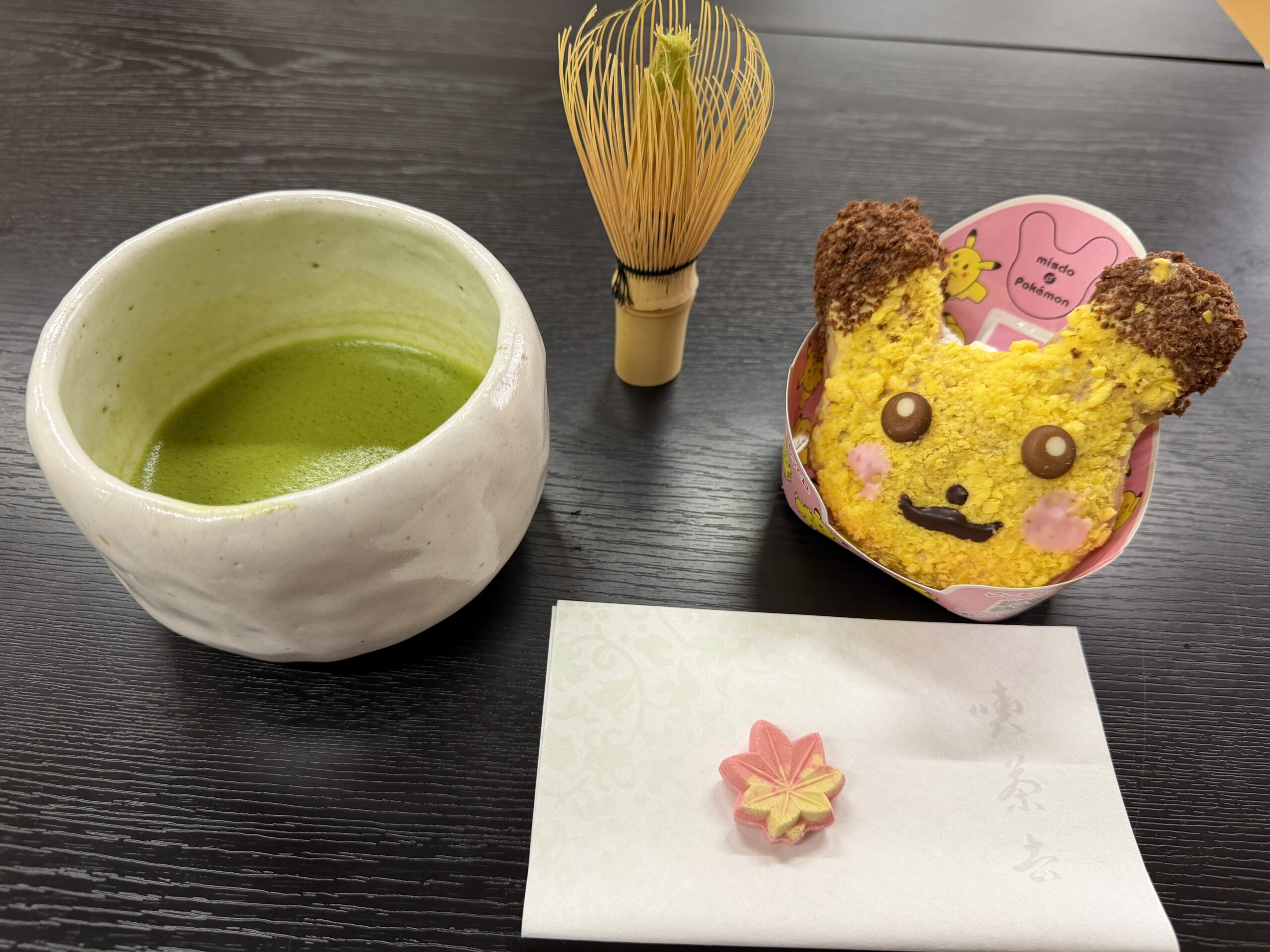
We also ask each mother to bring one sweet of her choice.
No sharing, this is a moment of self-indulgence. (They can if they want, though.)
It can be anything: a slice of rich cake, a whiskey-infused dessert, or something she’s always wanted to try.
This idea came from a viral social media post by a Japanese mother who wrote: “My husband once said, ‘I thought you really loved udon noodles, since you always order them.’”
In truth, many mothers order udon not for themselves, but for their children because it’s quick to serve, easy to eat, inexpensive, and nutritious enough.
They choose it for convenience, not preference.
They give up spicy ramen or medium-rare steak because it’s not suitable for sharing with little ones.
(Some fathers, meanwhile, often order whatever they like without much thought.)
At Chaberi-ba, mothers choose something purely for their own pleasure. Something that says, “This is what I love.”
Through Chaberi-ba, mothers are encouraged to take a break from being “Mama,” to sit down, sip, and rediscover small happiness in the moment, a sigh of contentment over a single cup of tea.
Rediscovering the Art of Japanese Tea
Beyond emotional nourishment, the circle also hopes to reconnect participants with Japan’s beautiful tea culture. In an age where bottled tea and tea bags dominate, fewer households use the kyusu. Just as joining a tennis club might inspire you to buy your own racket, Machi hopes that participants will one day choose and cherish their own kyusu, helping to preserve Japan’s delicate tea culture.
A Cup of Peacefulness
As the late Grand Master of Urasenke, Sen Genshitsu, famously said:
“Peacefulness begins from a single bowl of tea.”
Through Chaberiba, we hope that even one cup can bring a small moment of peace to a mother’s heart, a moment that gently ripples outward into her family, her home, and her everyday life.
Source: Rinnai Corporation. Survey on Childcare Situations of Working Mothers in Five Countries, official news release, February 12, 2019. Available at: https://www.rinnai.co.jp/releases/2019/0212/ (accessed November 12, 2025).