

Baisaō, born as Gekkai Gentei (月海元叡) in 1675 in Hizen (present-day Saga Prefecture), lived during Japan’s Edo period. He is best remembered for leaving the monastic life in his later years to sell tea on the streets and hills of Kyoto, embracing a simple, independent lifestyle devoted to sharing tea with ordinary people. This year marks the 350th anniversary of his birth.
He became a Zen monk at the age of 11, entering Ryūtsū-ji Temple, a temple of the Ōbaku sect in Hizen. Soon after, his talent was recognized by Zen Master Dokutan of Manpuku-ji Temple in Uji, who composed a verse in his honour. At the age of 33, Baisaō witnessed Chinese tea practices in Nagasaki, where leaf tea was being boiled – a custom that deeply impressed him and which he soon adopted.
After decades of monastic life, Baisaō moved to Kyoto at the age of 57. Not long after, disillusioned with institutional religion, he left the temple and began selling brewed loose-leaf tea (sencha) in public spaces. This is when he adopted the name Baisaō (売茶翁), meaning “the old tea seller.” He rejected materialism and the rigid formalities of the elite tea ceremony of the time. Instead, he offered humble, informal tea gatherings in nature, often along the banks of the Kamo River or at scenic viewpoints around the city.
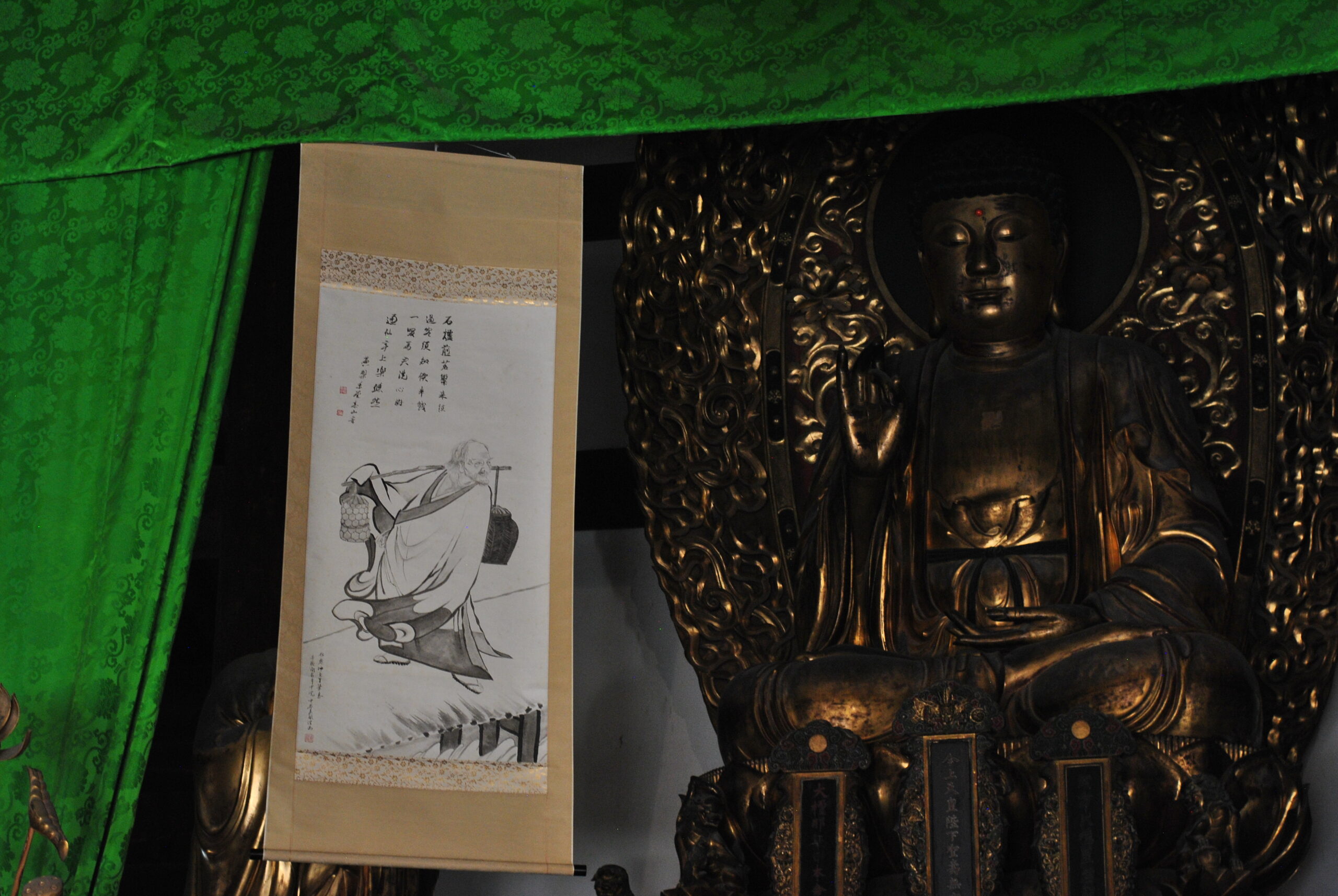
Baisaō brewed sencha, which was still a relatively new and unconventional alternative to the powdered matcha used in traditional tea ceremony. He had a bamboo tube on his tea cart for offerings in exchange for a tea cup – but often this did not secure him enough to even buy food. Nevertheless, he stayed true to simplicity and tea. In some of his writings, he mentions meeting Nagatani Sōen, the pioneer of Japanese sencha processing, and praises the quality of his tea. He also expressed admiration for the tea grown in Toganoo, a region in Kyoto where cultivation began with Eisai’s tea seeds in 1191. Baisaō called Toganoo’s tea the finest in all Japan.
Through his quiet, devoted practice, Baisaō helped transform sencha into a form of spiritual and aesthetic expression. He composed poems, engaged in Zen dialogue with customers, and attracted the attention of poets, scholars, Zen masters, and artists of his time.
Baisaō died in 1763 at the age of 88, in poverty and hardship. He did not look for popularity – yet he left behind a lasting legacy for tea practitioners and a life lived in harmony with nature and inner freedom. Today, he is widely regarded as the figure who popularized sencha and helped establish the custom of steeping loose-leaf tea in Japan.
A reflection of his way of life is clear in one of his most famous poems:
“Going far away to China
to seek the sacred shoots
Old Eisai brought them back
sowed them in our land.
Uji tea has a taste infused
with Nature’s own essence
a pity folks only prattle
about its color and scent.”
..that also happens to be one of my favourite tea quotes!
* References:
- Baisaō, The Old Tea Seller, translated by Norman Waddell
- A Bowl for a Coin. A Commodity History of Japanese Tea, by William Wayne Farris