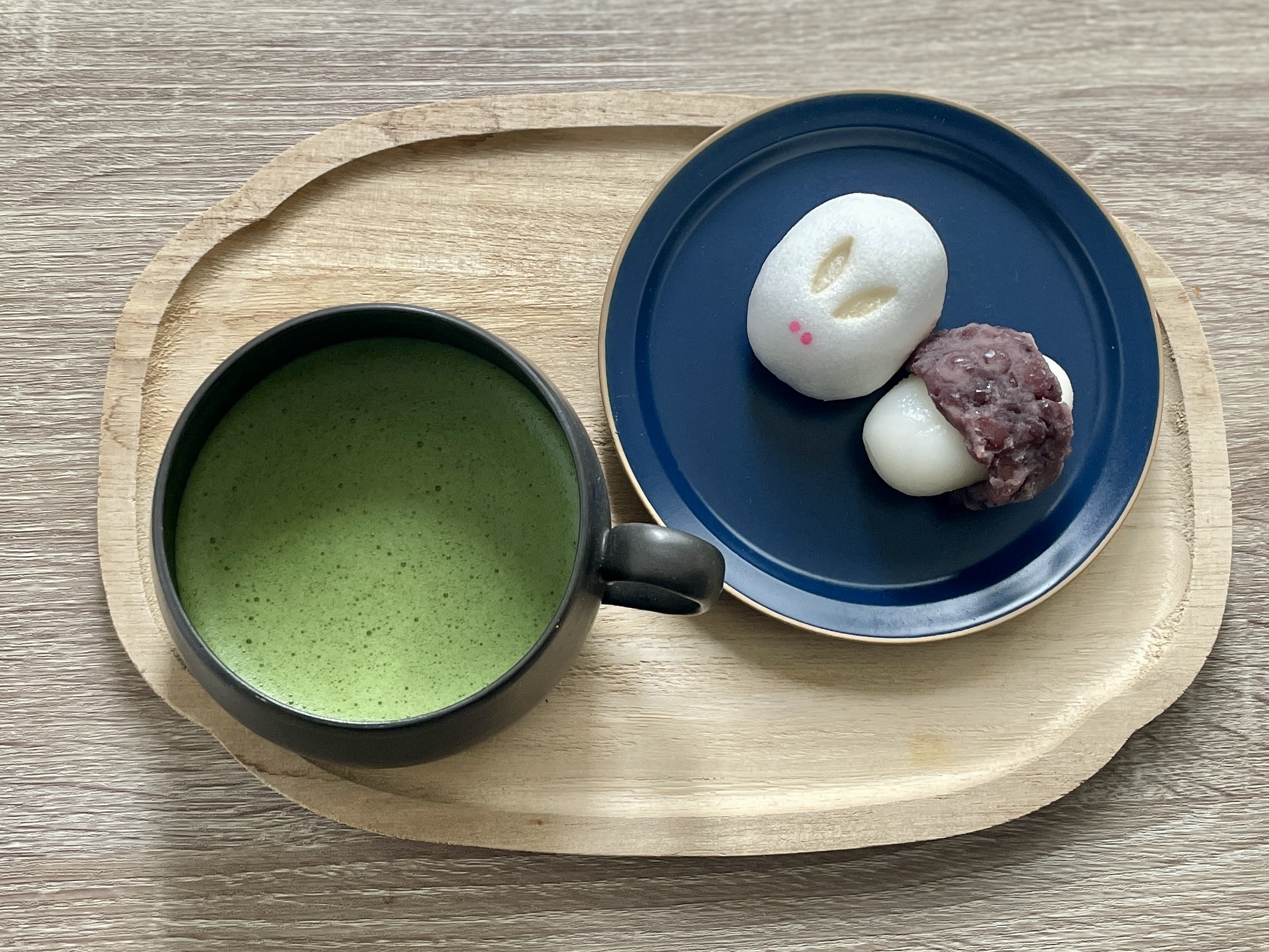

In Japan, the Moon Viewing Festival, or Tsukimi/Otsukimi, is closely associated with the “mid autumn full moon,” called Chushu no Meigetsu. The fifteenth night (Jyugoya) of the lunar calendar’s eighth month marks the traditional celebration, although today it is observed according to the modern calendar, typically falling between mid September and October. In 2025, the fifteenth night will occur on 6th October.

The purpose of Tsukimi has several layers of meaning. First, it is a way to express gratitude to the moon. In the past, people relied on moonlight for daily life and used the moon to track time and weather, so honoring it held special significance. Second, it is a time to give thanks for the harvest and pray for continued abundance in crops such as rice. Finally, it is a chance to enjoy and admire the beauty of the full moon, a practice celebrated in poems and stories across the centuries.
The roots of Tsukimi trace back to China’s Tang Dynasty, later spreading to Japan during the Heian period. Among the aristocracy, elegant moon viewing parties were held, combining music, poetry, and sake. These “moon banquets” are mentioned in classic literature such as The Tale of Genji by Murasaki Shikibu. Over time, the custom spread to common people, who incorporated the moon’s admiration into seasonal celebrations and festivals. By the Edo period, moon viewing was sometimes enjoyed from boats, blending ritual, leisure, and appreciation of nature.
Kyoto also maintains this tradition, with various temples hosting autumn moon viewing events and special tea gatherings, offering a chance to experience the refined culture of tea alongside the beauty of the moon.

A highlight of Tsukimi is the tsukimi dango, a type of rice dumpling offered to the moon. Interestingly, there are regional differences: in Eastern Japan, the dumplings are simple and round, while in the Kansai region, they are shaped like small taro roots with red bean paste wrapped around them. This reflects the older custom of offering taro rather than rice dumplings, which is why the full moon is sometimes called “Imo Meigetsu” or “Taro Moon.”
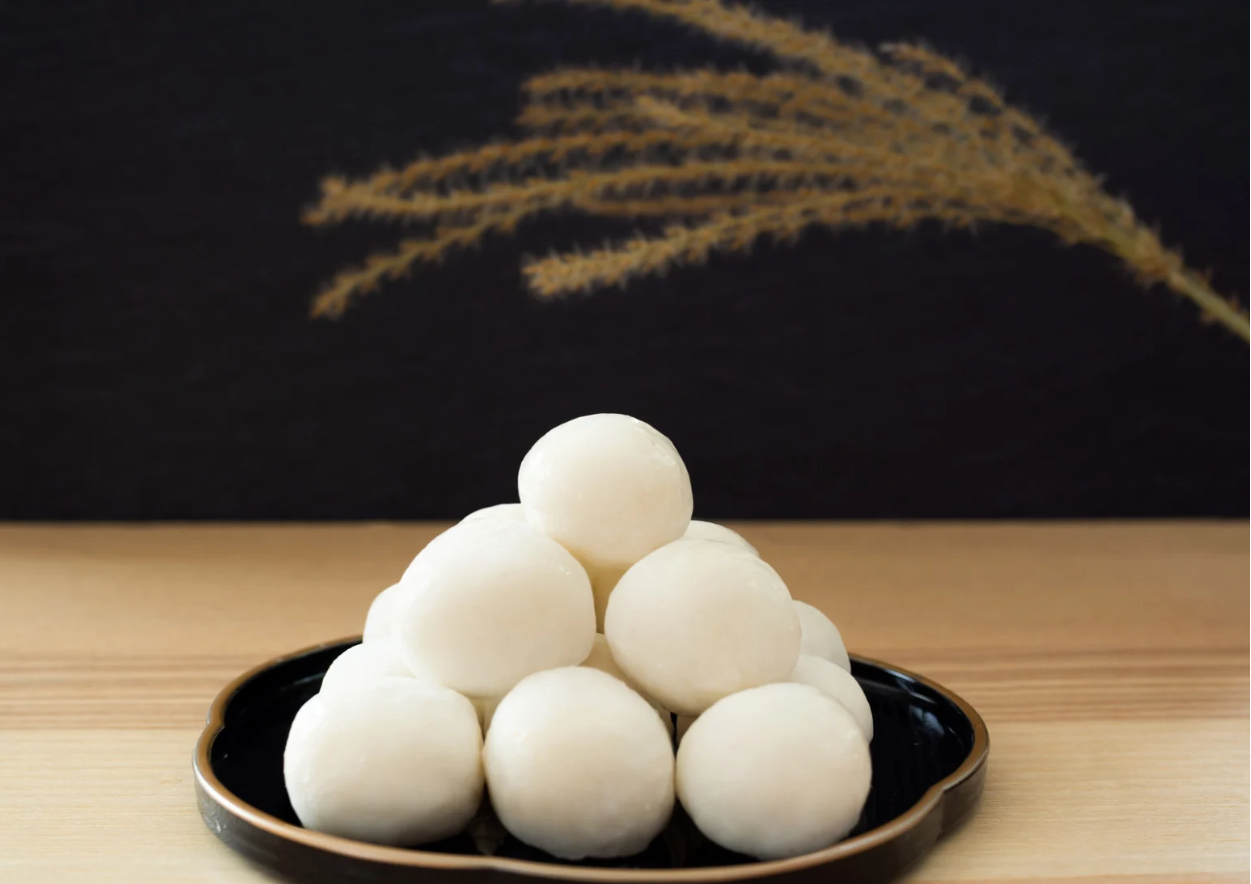
Another charming aspect of Tsukimi is the moon rabbit. In Japanese tradition, the markings on the moon are imagined as a rabbit pounding mochi, often depicted alongside tsukimi dango and pampas grass. The grass, called susuki, serves as a symbolic resting place for deities. Since the harvest season comes slightly later than the fifteenth night, susuki replaces rice stalks as an offering, maintaining the connection to fertility and abundance.

Why not prepare some tsukimi dango at home, brew a cup of tea, and spend the evening admiring the moon? It is a simple yet meaningful way to celebrate this beautiful Japanese tradition.