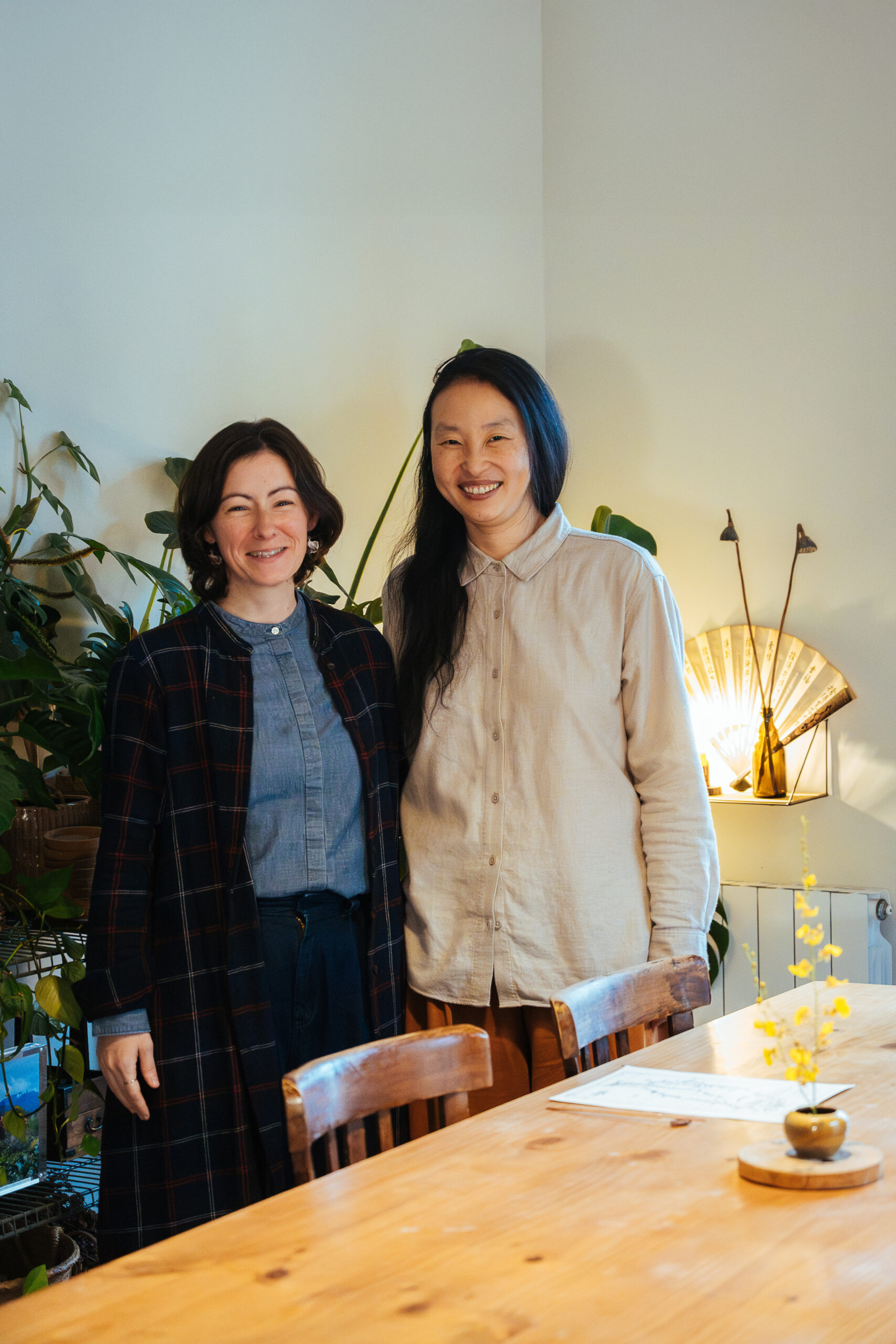
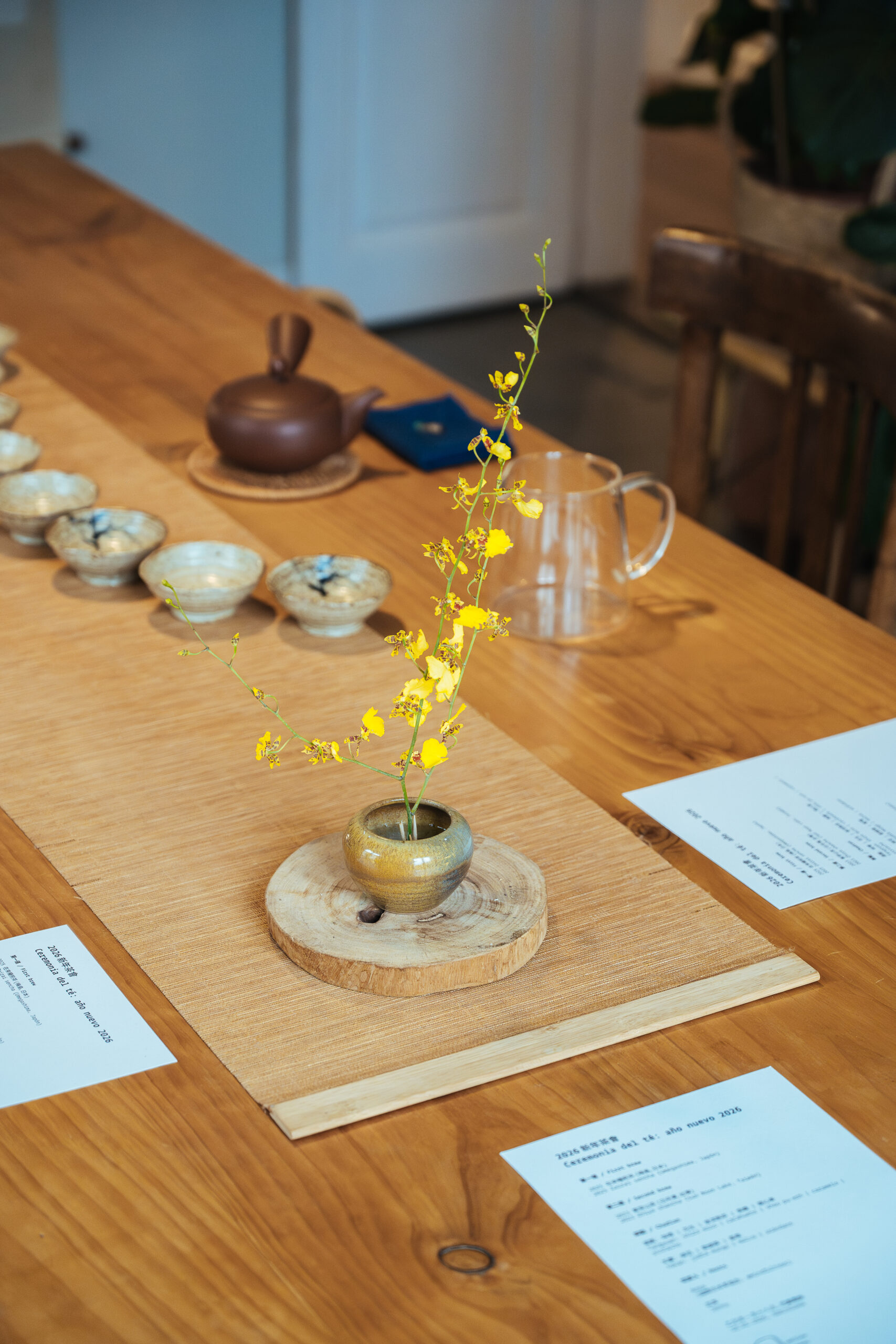
Jenny Chih Chieh Teng is not only a long time tea friend of ours, but also the founder of Mellow Sheng, a gastronomy and culture platform with emphasis on natural food-making processes, oriental tea culture, and Chinese calligraphy. She is specialised in Taiwanese teas and once again kindly invited us to join one of her beautiful tea ceremonies.
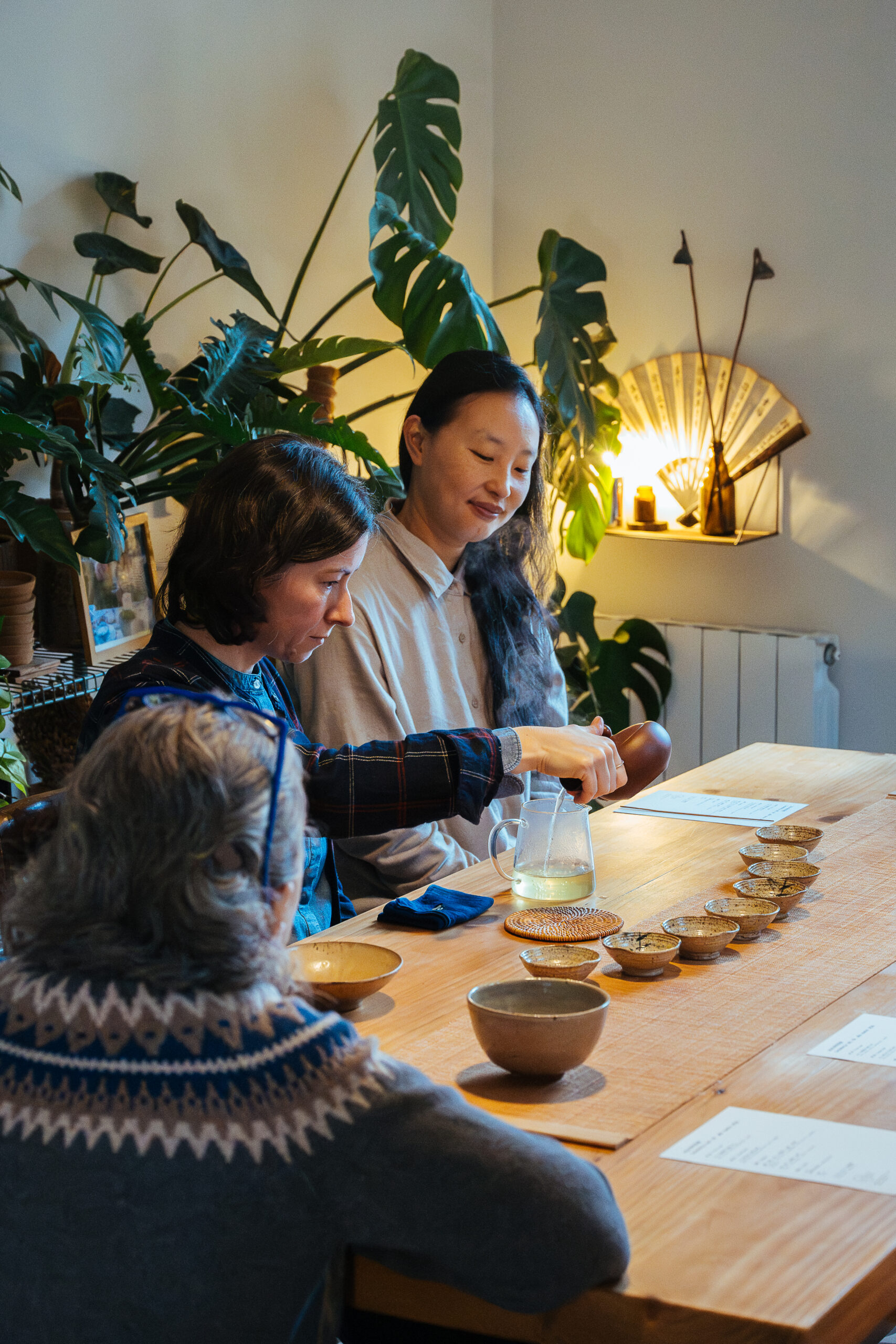
On 18th January, Anna joined Jenny for her first chakai of the year. In this intimate gathering of six participants, Anna brewed first a Japanese sencha and Jenny later a Taiwanese black tea. Each tea was very special, and even though they came from different countries and production styles, they shared some similarities.
Anna chose a quite unusual sencha: from zairai tea plants in Umegashima, which sprout purple buds, are organic, and are rooted in a mountain soil very rich in minerals. This tea and Umegashima are promoted by Masako Saito, an acquaintance we met years ago through a dear GJTea Fellow and tea tourism professor Lee Joliffe. The local tea has been involved in a new project for using tea leaves as food, fermenting them in the same style as Northern Thailand people do. For all these reasons, we thought it would fit very well with Jenny’s approach to tea and food.
Anna brewed the tea using a red Tokoname clay kyusu, serving the first brew in Japanese mawashitsugi style. The tea was very gentle and mineral. The colour of the second brew, poured into a glass pitcher, surprised everyone. The green was intense but light and clear, with almost golden sparkles. It almost seemed to remind of Umegashima gold in the local soil and its hotsprings.
Jenny chose a black tea made from wild plants from Sun Moon Lake – also zairai and also with purple buds. She brewed the tea using a red clay teapot, in gong fu cha style. The aroma of the tea was incredible – almost like very dark chocolate. The brew was very warm and comforting, yet delicate at the same time.
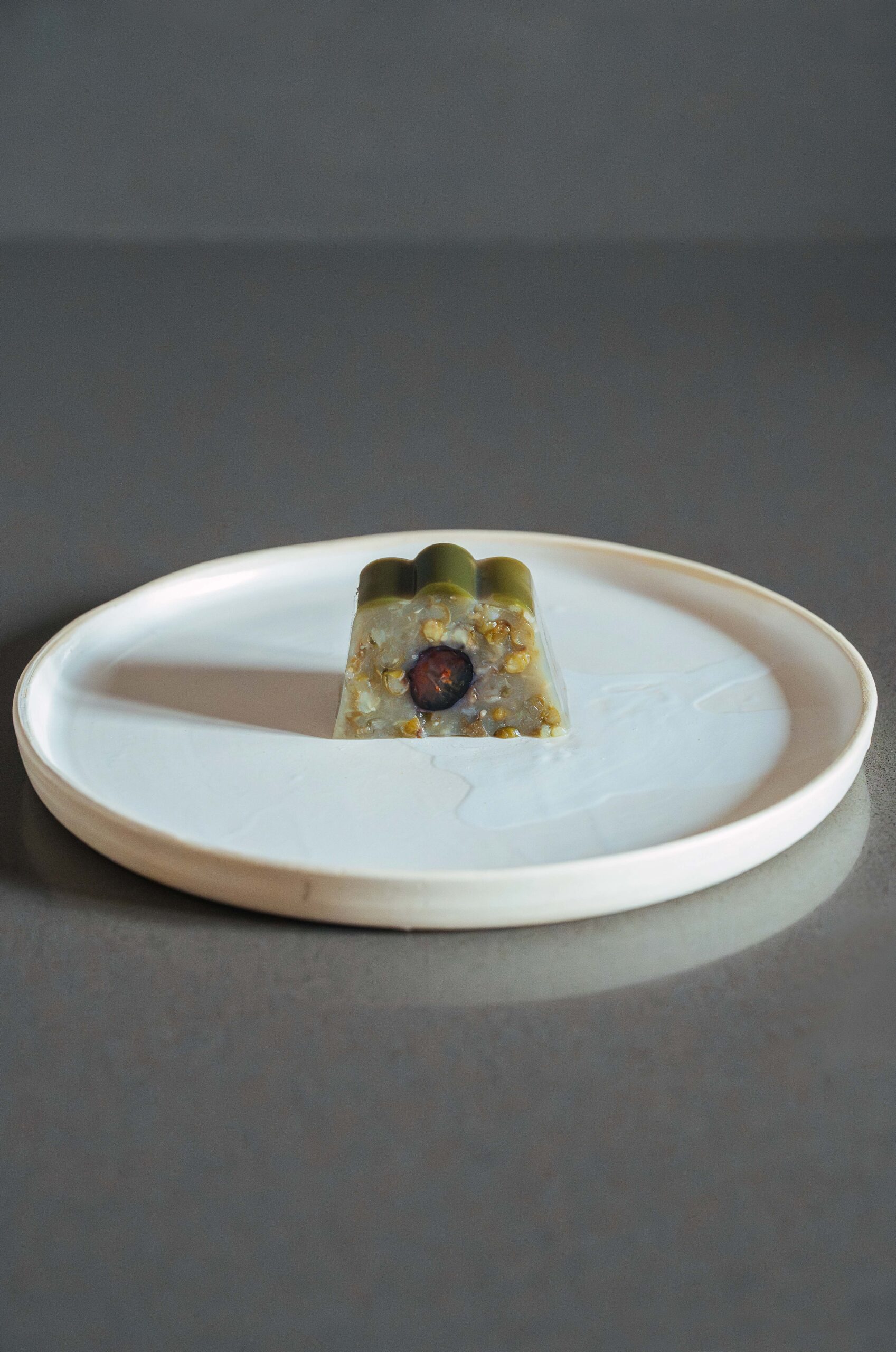
The sweets prepared by Jenny for the occasion had a lot of thought put into them. Both wanted to resemble the nature of the tea, coming from seeds and budding into purple colour on high mountains. The first dessert was a twist on a traditional tangyuan, with a white and a purple glutinous rice balls in puer tea syrup. The second was a mountain-shaped light yokan, made with mung beans, blueberry, and malva infusion. The delicacy and freshness of the food highlighted the clearness of both teas.
What a privilege to prepare tea in such a setting, in such company.. Thank you, Jenny!